|
|
STORE HOURS
Mon-Sat: 9am-6pm
TASTING ROOM HOURS
9am-5:45pm
Closed Sundays |
Prices Posted on our site are
subject to change without notice.
We are seeing our trade partners
increasing prices at a fast & furious rate.
(They're Fast and we're Furious.)
| |
Jasper Hill, Penfolds, Molly Dooker, Vasse Felix, Greenock
Creek, Henschke, Yalumba, Pewsey Vale, Aussie Riesling, Australian Shiraz
More Australian Selections

-
LANGMEIL
- This winery may have vines as old as their history!
It's a prominent Barossa Valley winery started in the 1840s by a Prussian
migrant named Christian Auricht. This enterprising fellow engaged in
agriculture and more, apparently, planting Shiraz vines in 1843, along
with having a bakery, butcher shop and cobbler shop.
Around the time of World War I the name of the town, Langmeil, was changed
as German-named places were routinely dropping this connection with
Europe. It was then called Bilyara and today the town is called
Tanunda. In the 1930s a descendant of Auricht launched the Paradale
winery, being sold in 1972 to the Bernkastel Winery. They fell on
hard times in the 1980s and closed their doors in 1993.
In 1996 the place was purchased by three Barossa residents and today one
of those guys and his family own what is now called Langmeil.
Richard Lindner and his partners set about renovating and invigorating the
modest estate and in the process discovered a very old patch of
vineyards. It's from that little site that their "The Freedom
1843 Shiraz" comes from. We've tasted a few vintages of this
and it is mighty impressive!
Lindner, his wife Shirley and their sons Paul and James run the
estate. Paul is the winemaker, while James deals with marketing and
sales.
-

A snapshot of the Lindner family taken in 2016
Here are some photos of the "Before" and
"After" in the restoration of the Auricht property:

We recall a blind-tasting of Aussie Shiraz some years ago and we
had included a Langmeil Shiraz called "Valley Floor." It handily
won the tasting and was exceptional.

Maybe a year or two later we organized another blind-tasting of
Aussie Shiraz but left out the Langmeil, thinking maybe we could discover
another stellar bottle. But, in fact, that tasting flight was a
disappointment as nothing was as exceptional as had been the Langmeil Valley
Floor Shiraz.
The winery changed importers a few years ago and we lost contact with them until
the Pandemic year of 2020 when their wine resurfaced with a favorite
importer.
We recently had a look at the 2019 Valley Floor Shiraz and this is magnificent
and as good as we remember it!
The youngest vines for this were planted maybe a decade ago, while the oldest at
more than a century old! The wine is medium-full bodied, but it's not the
fruit bomb, sweet red wine imported around the US in an effort to cater to
people who drink wine in place of a cocktail (often high in alcohol and usually
with a bit of residual sugar). The Langmeil is dry and has a touch of
tannin to go with its plummy, dark fruit character. There's a bit of spice
from both the grapes and the wood barrels in which this was matured.
French and American oak, with maybe 10% new American cooperage.
It's a really stellar bottle for $33..worth every penny!

We have some bottles of the 2014 vintage of The Freedom 1843
Shiraz...old vines...small yields...they had a difficult growing season as winds
during flowering reduced the size of the crop. With dry weather through
the growing season, there was a nice bit of rain in February which, as it turned
out, did not damage the crop but helped slow the pace of maturation which
benefited the grapes. This site was harvested on the 3rd of March and the
wine is remarkably deep but not over-the-top ripe. It's got lots of black
fruit elements with a nice bit of oak, as nearly 3/4s of the barrels were brand
new. And while many Australian wines are a bit shy in terms of acidity,
this seems to have enough backbone to be able to cellar handsomely for another
decade, or so. It's expensive, as you might imagine, but it's not stupidly
expensive like some iconic Shiraz bottlings.

As noted previously, the Langmeil property had a "cobbler
shop" on it thanks to the efforts of the founder, a blacksmith of
sorts. So to honor that heritage, the Lindners make this rather elegant
Cabernet from 10 to 20 year old vines. It's entirely Cabernet and it's
matured entirely in French oak, with 15% of the barrels being brand new.
There's dark fruit of the Cabernet and a whisper of wood on the nose and
palate. The tannin level is mild, so pairing it with a steak or lamb will
soften the wine nicely. It's a good $32 bottle and compares favorably to
Napa Cabernets costing a bit more.

The 2014 "Jackaman's" Cabernet is named after an old
World War II veteran named Arthur Jackaman who tended this small vineyard for a
number of years before retiring. The wine is matured in French oak and
you'll get a sense of some wood here, but the dark Cabernet fruit is in the
spotlight. Very fine and elegant.
The 2019 Rough Diamond Grenache is a lovely, medium-bodied red
with some berry and spice notes. They blended a bit of Counoise and
Carignan, maturing the wine in seasoned American oak. More fruit than wood
here, this is immediately drinkable and it's well-priced.
-
Currently in stock: 2019 LANGMEIL "Valley
Floor" SHIRAZ $32.99
2014 LANGMEIL "The Freedom 1843" SHIRAZ Sale $149.99
2019 LANGMEIL "Blacksmith" CABERNET SAUVIGNON Sale $31.99
2014 LANGMEIL "Jackaman's" CABERNET SAUVIGNON Sold Out
2019 LANGMEIL GRENACHE $23.99
-
-
-
-

-
-

JASPER HILL
 Located
in the Heathcote area of central Victoria (due north of Melbourne) is the
Laughton family's Jasper Hill winery.
The winery was founded in 1975 by Ron & Elva Laughton. Today they
dry-farm about 60 acres of vineyards divided amongst three sites. Two
of these are named for the Laughton's daughters, Emily & Georgia.
Ron Laughton has a degree in Chemistry and one in Food Science. He
worked for Kraft Foods and then for a large Australian dairy firm before
trading milk for grapes.
Having made a regular commute near Heathcote, one day Laughton stopped in
town and happened by a real estate company office with a "Vineyard for
Sale" posting. He made an inquiry and shortly thereafter found
himself to be a 'farmer.'
- It's clear he gave great thought to the prospects of
cultivating grapevines. Laughton realized the top vineyards in Europe
were dry-farmed, so planting grapes in an area requiring irrigation was out
of the question. Secondly, the figured planting vines using American
root-stock would fundamentally change the character of the resulting fruit,
so that option was nixed early on.
Third, though he had a background in commercial "agribusiness,"
the notion of "better farming through chemistry" had little
appeal, so Laughton is an early pioneer in cultivating grapes using organic
techniques. Today their vineyards are largely farmed using biodynamic
principles.
The "home" base is called Emily's Paddock. It's planted
primarily to Shiraz with a few rows of Cabernet Franc. Then they have
a ten acre patch called Cornella Vineyard and this is devoted to
Grenache. Well-known is the Georgia's Paddock and there one finds
about 42 acres: Shiraz mostly, with Riesling and a patch each of Semillon
and Nebbiolo.
The Jasper Hill wines tend to receive great critical acclaim and they're not
easy to find.
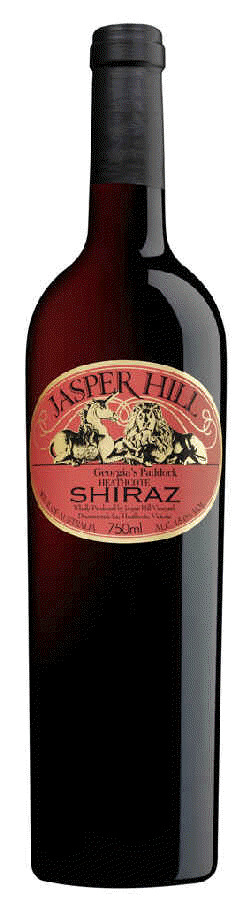
We're fans of their Shiraz and it's typically a more refined and elegant
wine than most from Australia. You won't find the 2005 vintage of
Georgia's Paddock Shiraz, for example, to be inky in color, teeming with
gobs of fruit and showing more wood than you can shake a stick
at.
Instead, it's a well-mannered wine, with bright ruby red color, aromas of
cherries and a faintly earthy tone. The tannin level is moderate, so
it's enjoyable now and should continue to grow for several more years.
-
- Currently in stock: 2005
JASPER HILL "Georgia's Paddock" SHIRAZ Sale
$69.99
-
-
-

-
- HENSCHKE
 An old and fabled producer, Henschke is a family-run business, founded in
1868 in South Australia's Adelaide Hills. Though they make a range of whites and
reds, it's a couple of reds on which the legend of Henschke is based.
The 5th generation runs the show, but the 6th generation of the Henschke
family is now learning the ropes.
- The "Hill Of Grace" (Shiraz) has been the
heavy hitter bottling from Henschke. But they make an impressive range
of wines and we've noticed they're not quite as sought after in our market
as they were some years ago...
It's not that the wines are in any way inferior. It's simply they're
no longer the "new kid on the block" and many wine drinkers are
more impressed by the wines of current fashion which tend to be deep in
color, high in alcohol and perhaps with a touch of sweetness.
Stephen Henschke has been the winemaker, though we understand his son Johann
is overseeing the cellar and vinification of their grapes. Stephen's
wife, Prue is a viticulturist and has been overseeing the vineyards.
Though you might think they'd only produce wines such as Shiraz, Semillon
and Cabernet, in fact, the Henschkes have great curiosity about other
"foreign" grapes. As a result, you'll find some rows of
Nebbiolo, Tempranillo, Barbera, Mataro, Grenache and Counoise in their
vineyard plantings!
The vineyards have been farmed organically for many years and some
biodynamic cultivation is being done, as well. For some growers
biodynamics is a bit of "religion." The Henschkes are
willing to test the various practices, utilizing biodynamic techniques where
beneficial.
We have a few Henschke wines in the shop.
-
- The 2017 Mount Edelstone is a monumental, benchmark
bottle. They have Shiraz vines of more than 100 years old, creating a
wine of intense, dark fruit fragrances with the most intriguing spice
notes...add to the mix a touch of sage, perhaps...it's young and
cellarworthy, but capable of cellaring many more years.
The 2022 Henry's Seven is a Rhone-styled blend. It's named honoring a
grape growing pioneer, Henry Evans, who's planted vineyards at Keyneton way
back in 1853. When he died, his widow uprooted the vineyards as
alcohol was, we understand, against her religion.
The wine is a blend based on Shiraz, with Grenache, Mourvedre and Viognier
in the mix. It's a fairly potent wine, having 15% alcohol. Dark
in color, we like the blackberry-like fruit and mildly spicy undertones in
this wine.
It's quite enjoyable right now, though it can probably be held for several
more years.
We also have some bottles of their Keyneton Estate wine. It's a Shiraz
blended with Bordeaux varieties. There's usually Cabernet Sauvignon,
Merlot and Cabernet Franc in the mix with the Shiraz. Twenty
percent new French oak gives a light woodsy tone to the wine which features
dark fruits (plums, blackberries with a touch of cassis). It's quite
good presently and ought to cellar well for 5 to 10 more years.
Currently available:
Henschke 2022 "Henry's Seven" Sale $42.99
Henschke 2017 Keyneton Estate $64.99
Henschke 2017 Mount Edelstone $219.99
-
-
-
PENFOLDS
- Penfolds is an iconic wine brand and it has a long history as a
leading producer of wine in Australia. It had been bought in 1976 by
a beer company and this ownership morphed into what was called
"Southcorp." From there it changed to Foster's Group and
then was spun off into what's now called Treasury Wine Estates. This
portfolio comprises 44 wineries other than the Penfolds brand. In
California they have labels such as Etude, Beringer, Beaulieu Vineyards
and Stags' Leap Winery. Coldstream Hills, Rosemount and Lindemans,
all once-upon-a-time were fierce competitors and now they're under the
same, large umbrella.
Though they often make good wines, the marketing department seems to have
a lot of "say" in the production of Penfolds wines.
Maybe we are wrong on this perspective.
We are sad to see this company use once-prestigious wine brands for cheap,
marketing-driven products.
In 2021 they launched a new portfolio of California wines bearing the
Penfolds brand name!
And they are working on making a wine in Bordeaux and a sparkling wine in
Champagne.
Winemaker Peter Gago has been quoted as saying they're making these wines
"through a Penfolds prism."

How will these wines be received by consumers?
Are wine drinkers looking for wines which are crossing international
borders?
The folks at Chateau Lafite have invested in various wine regions, but
they don't label their Chilean wines as "Lafite" or
"Rothschild," but as "Los Vascos."
The Perrin family who own Rhône Valley vineyards launched a winery in
California's Central Coast, but they have not used the prestigious
Beaucastel name for the wines of their Tablas Creek winery.
The Kendall Jackson family from California owns vineyards in foreign
lands, but each has its own, unique winery name.
And perhaps this company is smart to cash in on their fame using Penfolds
for wines made outside Australia???
We read a review of the 4 new Penfolds' wines by local critic/wine guru
Karen MacNeil from early March of 2021 who praised the wines.
A friend who's a wine educator in Australia and who travels around the
world responded to my query about his view of these wines...
Penfolds
have had more name changes, downgrades in profits, management scandals
than the Kardashians. As far as I’m concerned this wine is a very
poor collaboration or marrying of partners’ Barossa/Napa and in my
view is not worth the money. It’s a PR exercise and anyone in the
trade would not pay the asking price. It’s AUS$220 here. It got some
airtime on the TV news a few months ago and that’s about all.
Haven’t seen it advertised in any of the liquor shops or any write
ups about it the in press. I think we can safely assume it's Penfolds
just trying to keep the brand alive under very difficult trading
circumstances.
It's a con job if you ask me! |
But they do have some terrific Australian wines.
Grown in Australia and vinified & bottled in Australia.
The BIN 389 is a Cabernet/Shiraz blend, nicely
oaked and medium bodied. A good, solid Aussie red at a somewhat reasonable
price. Unfortunately, it seems this wine had suddenly become popular
in China...as a result, it's become a more costly bottle. It has been
pretty nice, though.
Bin 707 had been fabulous! I think it's a benchmark wine for Australian
Cabernet. If you recall the deep, haunting fragrances of Napa
Cabernets such as 1968 Heitz, 1968 BV Private Reserve or the 1970 BV Private
Reserve and liked those wines, then this is a must-taste! We have not
had this in the shop for a number of years now...
Their
Magill Estate is called by some "Baby Grange," but I don't find it similar in
style at all. Magill is as heavy or brawny as the Grange. In fact, in some
blind-tastings, I've tabbed the Magill Estate over the Grange. The Magill Estate
Shiraz is typically matured for a bit more than a year in new French and American
oak It is a single vineyard of relatively old vines, located in South
Australia. We don't currently have this.

- The
St. Henri wine has been made since 1956 and is not the big oak
monster typical of many Aussie Shiraz. They usually mature this in large casks or
puncheons and the wood is seasoned so it doesn't impart much oak. St. Henri comes
from Shiraz grown all over...Barossa, Coonawarra, McLaren Vale, Clare Valley and Eden
Valley.
It's quite a different animal from their famous "Grange," as the
wine is elegant and doesn't show oak as the first feature which you encounter.
The 2015 is the current bottling and it's 100% Shiraz. The wine offers
hints of brown spices and some ripe, almost jammy fruit notes.
Drinkable now, it ought to cellar well for a decade or so.
-
-
-
-
-

-
"Grange"
used to be called "Grange Hermitage," a tip of the cap to the Rhône
Valley Syrah of the Hermitage appellation. It was first produced in
the 1950s after their winemaker, Max Schubert, visited France and tasted
extraordinary wines...I suspect he was tasting Bordeaux, since Grange
Hermitage was never much of a Rhône-styled wine, despite it being made from
Syrah. It was big and ripe, having lots of cedary oak to it. In
those days nobody aged their Northern Rhône Syrahs in small oak
barrels. Anyway, Grange was the "ambassador" from Australia,
a wine which changed the minds of many wine drinkers that the land Down
Under could, in fact, make stellar, showy wines.
Over the years it continues to be an impressive wine. Very fine and very cellar-worthy and
stratospherically-priced. Still, it finds an appreciative
audience of consumers willing to pay for a bottle which rivals top
California Cabernets, French Bordeaux, major Super-Tuscans, etc., as a wine
for a special occasion.
-
- RWT is
an interesting concept. As Grange comes from various vineyard sites,
RWT (red wine trial) comes from the Barossa Valley. The wine
spends a bit more than a year in small oak and about two-thirds of the
barrels are new. The wine shows a lovely plum-like fruit...dark
fruits...blueberries? Nice wood and a bit of spiciness...good
now and it ought to cellar nicely for a number of years. The 2016 is
the current offering.
-
-
-
-
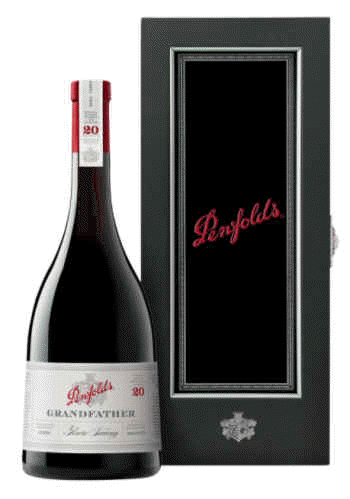
The fortified wines are quite nice, especially the very old
"Grandfather" so named because of its age. It's a solera
styled Tawny (no longer bearing the designation "Port" out of
respect for producers in Portugal's Douro Valley. It's said the Solera
has wines from 1960 through 2004 and they claim this is roughly a 20 Year
Tawny.

As you can imagine, the "Club" bottling is younger, but
it's still an impressive sweet wine given its quality/price ratio.
-
- Currently available:
- 2015 ST. HENRI SHIRAZ Sale $109.99
- BIN 389 Cabernet/Shiraz Sale $64.99
- 2002 GRANGE Sold Out
2016 RWT Sale $159.99
- 2008 BIN 707 Cabernet Sold Out
- CLUB "Tawny" $13.99
- "GRANDFATHER'S 20 Tawny" $99.99

-
PEWSEY VALE
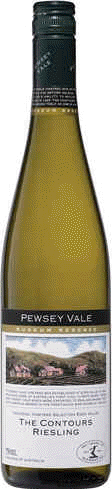 The
Pewsey Vale brand has been around for many decades and the vineyard site is
in the hills neighboring the Barossa Valley in what's called the Eden
Valley.
The history of this locale dates back to the mid-1800s and grapes were, in
fact, planted there in those days. Today the estate comprises about
145 hectares of vineyards, with about 50 planted to vineyards.
Riesling is what this place is all about. And how!
The property has had its ups and downs over the past century-and-a-half,
being abandoned as a vineyard until the late 1950s when the owner
collaborated with the Hill-Smiths who wisely realized this cooler-climate
site might be best suited to something like Riesling rather than Cabernet
and Shiraz.
They set about planting the vineyards in a particular fashion to catch as
much sunshine as possible, hence the contoured rows of vines (as you can see
in the art work posted above). -
- They make several Rieslings at this property and we're delighted to
feature their "top of the line" bottling called, appropriately,
"Contours." This comes from their coolest site.
It's a Riesling which would cause a good German Riesling producer (or one
from Alsace, Austria or Italy) to raise an eyebrow. And the wines tend
to have the bracing acidity which gives them a long life if you don't open
them when they're young.
I could have written "pull the cork" for that last line, but
Pewsey Vale has long been an advocate, well before it was even a bit
popular, to use screw-capped closures.
The Rieslings had been bottled with Stelvin closures way back in 1970,
rolling the rock up the hill every year by trying to convince skeptical
consumers that this closure was beneficial. In 1984 they abandoned the
screw-cap but have since returned, finding the wines age handsomely with a
Stelvin closure.
Our course we now see some good German and Austrian wines with closures
other than a cork (especially those glass stoppers) and so it's not as
difficult for consumer to buy a non-cork-finished wine.
Currently in stock is the 2015 and 2012 Contours Riesling. Contours is always
given at least 5 years of aging before they release it. The wine is
quite complex and displays beautiful floral notes of classic Riesling, but
all sorts of other tones: lemongrass, exotic spices, pineapple and you
might even sense a hint of a greenish herbal note. Dry, too, so it
pairs handsomely with Roasted turkey, Asian-styled foods, Dim Sum, Sausages,
etc.
The 2012 is the fuller bodied of the two. It's low in alcohol and
quite crisp, but the 2015 is blossoming nicely...we've enjoyed several
bottles (so far) in 2023.
Both wines display the fragrances of petrol, a classic hallmark of aged
Riesling.
There are some bottles of the 2013 and this, despite its age, is still
evolving and probably needs a bit more time. It's less complex
presently than either the 2012 or 2015.
-
- Currently in stock: 2015 PEWSEY VALE "Contours"
RIESLING $38.99
2012 PEWSEY VALE "Contours" RIESLING $42.99
2013 PEWSEY VALE "Contours" RIESLING $38.99
-
-
-
-
-
- JIM BARRY
- Jim Barry was Number 17. In an era when people all want to be Number
One, Number 17 seems a bit odd...But Jim Barry was the 17th person to
graduate from Australia's famous Roseworthy College with a degree in
winemaking.
This fellow worked for a couple of wineries before he and his wife Nancy
launched their own wines in the mid-1970s. Barry had long realized his
job as a winemaker was much easier if he had good grapes to work with.
The couple amassed a fair bit of acreage in the Clare Valley, though today
the company, still owned by the Barry family, has a few acres in the
Coonawarra region, too.
-
 We
had long been fans of Jim Barry's Armagh Shiraz, a Clare Valley icon.
It's escalated in price over the years and no longer carries a price
tag...the bottles come with ransom notes!
- The Armagh comes from a vineyard Jim Barry planted in 1968 from a vineyard
site which routinely allows the Shiraz to attain a measure of
maturity. It's usually a high octane wine and this vintage is well
over 15% alcohol. The wine is matured in both French and American oak
cooperage and the wood is quite present in the wine, but still the fruit
seems to soak up a lot of the oak.
- It's showing well now and these are said to age handsomely...I can't say,
since I've not had one with a lot of bottle aging...but I suspect it will
continue to grow with cellaring.
-
-
-
-
-
-
-
-
 Slightly
more reasonable is a Cabernet called Benbournie, after a small settlement
first inhabited back in the 1850s.
The 2005 is a recent release, spending about 14 months in oak and then
several years in bottle before being deemed worthy of sale. This has
been the philosophy from the start in making a wine of cellar-worthiness and
then actually giving it some bottle aging so the consumer can buy a bottle
that's ready to put on the dinner table.
It's a fairly powerful red, being well more than 14% in alcohol.
There's a good measure of dark fruit to this wine, but a mildly herbal
aspect, too, reminding you that it's Cabernet (and not Zinfandel or
Shiraz). The oak adds a bit of spice and cedar.
It's a robust red without being over the top. And it's certainly
drinkable now. Especially with lamb or a steak.
-
- Currently in stock: 2005 JIM BARRY "Benbournie"
CABERNET Sale $99.99
2006 JIM BARRY "Armagh" SHIRAZ Sale $199.99
-
-
MOLLYDOOKER
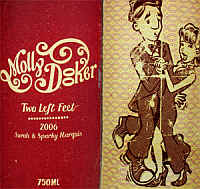 "Mollydooker"
is a sinister Aussie term for left-handers.
What may seem gauche to you is perfectly right for Sarah and Sparky Marquis.
This couple has spent quite a few years in the Australian wine business,
having started at Sarah's parent's winery, Fox Creek. They've
developed other labels along the way, including Henry's Drive, Marquis
Phillips, Parson's Flat and Shirvington. Now they've launched their
very own brand and have been receiving accolades from numerous wine critics.
Their mantra is "Wines that make you 'Wow!'"
Mollydooker wines are made for today's wine consumer who is looking for
something striking and a bit extreme (or intense, if you prefer). The
wines all are rather high in alcohol, so fasten your seatbelt when sitting
at the dinner table.
Our late colleague Bob Gorman asked why we had this in the shop and I told him some years ago
"Watch...people will be asking for these wines...they're high octane, a
bit flabby and slutty...just watch." And the first day,
some years ago now, the wine was on the Aussie rack, two different customers
immediately brought bottles to the counter to take home...
- Currently in stock:
THE BOXER (Shiraz) Sale
$27.99
THE MAITRE D' (Cabernet) Sale
$27.99
CARNIVAL OF LOVE SHIRAZ Sale $84.99
GIGGLEPOT Sale $49.99
2 LEFT FEET Sale $27.99

-
YALUMBA
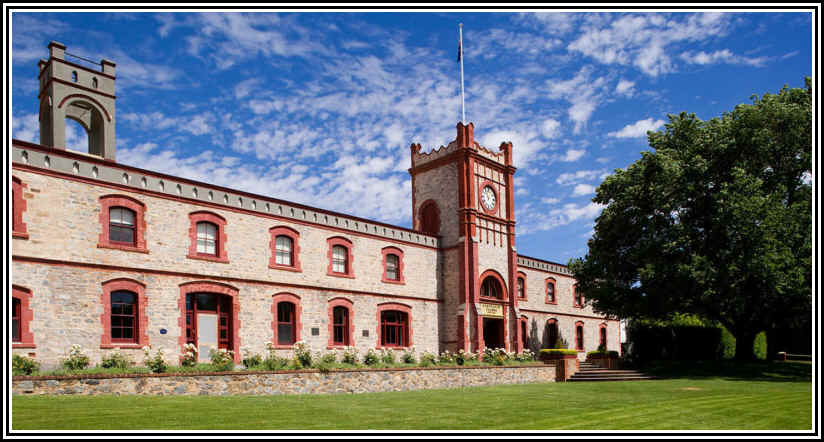
 A sizeable, old, well-established winery, Yalumba is located in
the Barossa Valley. Owned by the Smith family (that's their real name), they make a
serious quantity of wine.
The range of wines made by this company is extraordinary!
They have solid, if simple, entry level wines...there's good mid-range wines
and serious upper-echelon bottles.
From dry table wines to late-harvest wines to fortified, sweet wines, these
folks cover all the bases.
-
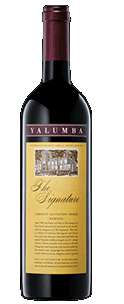
- We were privileged to attend a vertical tasting of
Yalumba's "The Signature," a blend of Cabernet and Shiraz.
The wines hold up amazingly well and the 2002 was spectacular in 2013!
The 2013 was a terrific wine, too. Cabernet and Shiraz from both the
Barossa Valley and Eden Valley are blended and then matured in a remarkable
array of cooperage. But first they encourage the indigenous yeasts in
starting the fermentation and then have cultured their own proprietary yeast
to assure the fermentation reaches its completion.
French oak, American oak and Hungarian wood are employed in producing this
wine. Thirty percent of the barrels are brand new and they strive to
produce a balanced wine. It's under 14% alcohol, too.
We don't have a current vintage presently...we've not tasted one recently...
The Yalumba label also produces some very fine fortified wines.
-
- We
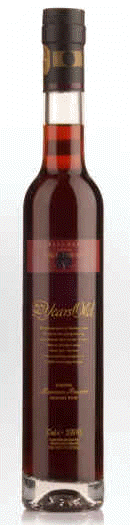
have some bottles of their 50 Year Tawny Port, a lovely rarity...they
started putting down a stock of fortified sweet wine in the 1930s, we're
told. The wine is made of a range of grapes, including Shiraz,
Grenache, Mourvedre, Dolcetto and Muscadelle. The brandy used to
fortify the wine is even made by Yalumba!
I find a seriously nutty, Sherry-like note in the wine and it turns out
they've been blending in a bit of Amontillado to balance the wine and keep
it from being too cloying on the finish.
There's a delightful 21 Year Tawny as well. It's a somewhat
similar blend to the rare 50 Year Tawny.
.
The wine displays lots of 'sweet' notes so there's caramel and toffee with
honey, a note of molasses, maple syrup and such...
Show Reserve Muscat is also delicious and rather unassuming compared
to the Tawnies...but don't let it fool you! This wine is just as
dangerous...
They blend old, well-aged Muscat with younger renditions, producing
this magnificently aromatic, sweet Muscat which would be appreciated by a
winemaker in Setubal or one in Jerez. It's sweet and aromatic, so a
small pour in a nice sized wine glass at the end of a meal is ideal.
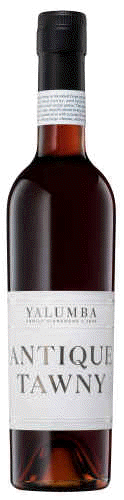
The Antique Tawny no longer is labeled as "Port" out
of respect for Douro Valley wineries in Portugal.
Yalumba had used Shiraz, Grenache, Mourvèdre and Muscadelle to make this wine.
These days the also include some Portuguese varieties in the blend, including
Touriga, Tinta Cão and Tinta Negra Mole.
The fermentation takes place in stainless steel before being aged in seasoned
barriques and larger puncheons.
They tell us the wine is usually about 12 years old before bottling...a
remarkable bottle and it's well-priced.
You can easily compare this to good Portuguese Tawny Ports and it's fairly sweet
without being heavy.
The finish is quite pleasant and long.
We usually serve this a bit cool, but not refrigerator temperature...about 50-55
degrees seems to be about right.
- Currently available:
- YALUMBA "Show Reserve" Muscat
$22.99
(375ml)
YALUMBA "21 Year" Tawny $52.99 (375ml)
YALUMBA "Antique Tawny" $22.99 (375ml)
-
-
-
BACK TO THE PREVIOUS AUSSIE
PAGE
ON TO OUR HOME PAGE
|