|
|
STORE HOURS
Mon-Sat: 9am-6pm
TASTING ROOM HOURS
9am-5:45pm
Closed Sundays |
Prices Posted on our site are
subject to change without notice.
We are seeing our trade partners
increasing prices at a fast & furious rate.
(They're Fast and we're Furious.)
| |
- ROSÉ WINES
We are mildly amused by the reaction of most people to the
thought of drinking a rosé or pink wine. "Oh, no! We don't want anything
sweet!"
Or: "We want real wine."
Years ago, in the late-1960s and early 1970s, the fashionable wines were Blue Nun
Liebfraumilch, Mouton-Cadet from Bordeaux, a straw-covered bulb-shaped bottle from Tuscany
and a pair of Portuguese pink wines. Mateus came in a flagon, while Lancer's was put
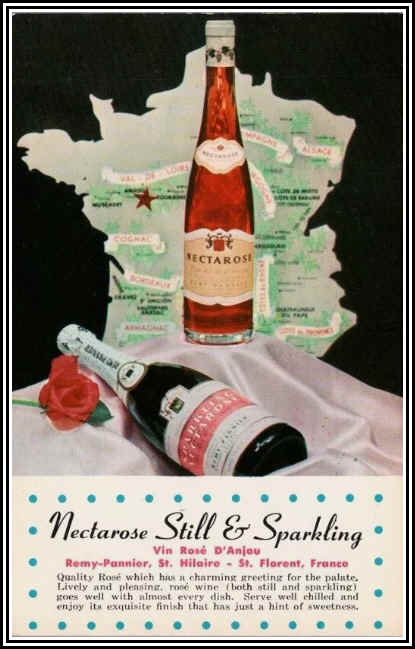
into a "crock" bottle. From France came "Nectar-Rose," a
Cabernet rosé from the Loire Valley. Almaden, then a large winery in San Jose and
Hollister, used to make a delightful Grenache Rosé. Paul Masson made a fizzy
rosé called "Crackling Rosé." Naturally, these wines were sweet, relying on
sugar for their character.

-
-
In Mediterranean regions where people have been drinking wines for more than a few
years, rosé wines are not uncommon. In fact, they're embraced with tremendous
enthusiasm!
In Spain, for example, we found many restaurants with a dozen or two rosé
wines, but
a couple of whites and then the obligatory 30-50 red wines. And the wines there are
not sugary, sweet insipid excuses for wine. They can be flavorful and stone, bone
dry.
-
France produces many wonderful
rosé wines.
-
-

The Rhone Valley's
"Tavel" is famous and usually expensive (compared to other pink
wines...That is not longer the case, with some wines from Provence
costing a pretty penny).
The Tavel
appellation is seen only on the pink wine; you won't find a white or red
version of Tavel. Grenache is "the" grape of this famed rosé.

Provence also produces a wide array of
pink wines, especially famous being those from Bandol. In
Provence, by the way, the wines with a more light orange/onion skin/pale
salmon color are highly prized. They don't care much for deep cherry
red colored pink wines. As mentioned earlier on this page, some
of the pink wines of Provence now can be extremely pricey.
-
Bordeaux even offers
rosé,
yet where are you likely to find that? These wines, you
see, never attain high numerical scores in the various journals because these are simply
not fancy enough for wine geeks.
-
-
California has been producing rosé wines for decades. They were typically made
when red grapes didn't achieve a sufficient degree of ripeness to make a big red wine.
Then, when growers planted tons of red grapes in the early 1970s, the market wanted
fruity wines and wineries obliged making "white wines" (well, they were not
red...some were pink or had the color of onion skins) from red grapes. Some were not
saleable as "rosé," but sold as Blanc de Noir, snobby wine drinkers
would buy.
In the early 1970s, almost every winery seemed to have a rosé! Caymus called
its rosé "Oeil de Perdrix" (Eye of the Partridge) and the wine was made of
Pinot Noir.
-

Robert Mondavi made a beautiful Gamay Rosé from Napa Valley fruit. At
a dinner where I was trying to translate Italian and English for Mr. Mondavi
and a prominent Barolo winemaker, we spoke about wines from the first decade
of "Robert Mondavi Winery" and I mentioned this Gamay Rosé and
his eyes lit up.
"That was a good wine!" he cried.
And he was right!
Mirassou
used to make a dynamite "Petite Sirah Rosé."
Sebastiani had "Eye of
the Swan."

The famous Cabernet
vintner, Joe Heitz, made a stellar Rosé of a grape they were led to believe was
Grignolino.

When this wine hit the market on its annual release
day, we knew it was Spring Time!
The Heitz family sold the winery in 2018 and its new owners have made a number
of changes, including (at least for now) not making this fabulous wine.
Those grapes are now used for a simple sparkling wine called
"Brendel."

While the Heitz Rosé was remarkably floral and a fruit basket (we suspect many
of the vines are not actually Grignolino, but likely Brachetto), the fizzy
Brendel wine is one dimensional and far less fragrant.
-

-
-
Mill Creek, in Sonoma's Healdsburg, made a Cabernet Sauvignon
Rosé,
as did Simi nearby. The Kreck family (as in Mill Kreck) copyrighted
or trademarked the term
"Blush" for its "Cabernet Blush." Other wineries, finding this
term to have marketing power, could call their pink wines "Blush" wines only if
they paid a royalty fee to the Krecks!
Eventually, though, the term became a popular description for virtually any
Rosé and it was easier for consumers to remember and
(than "Blanc de Noirs" or "Oeil de Perdrix).
The Kreck family continues to make a pink wine, but these days it's simply
labeled as Cabernet
David Bruce was one of the first to make a "Blanc de Noirs," produced from
Zinfandel, if memory serves. This was a brownish, onion-skin-colored wine.
Bob
Magnani at Grand Cru Vineyards in the Sonoma Valley made a "Nouveau"-styled
wine, as well as a Blanc de Noirs.
Sutter Home, at that time a producer of
"serious," big Zinfandels from Amador County fruit, made a "Blanc de
Noirs." This was a "White Zinfandel" and theirs was a bit
sweet as the fermentation was "stuck" (did not finish). This turned into a massively popular wine and made the Trinchero family wealthy in
no time! They had struck gold!


-

I was affiliated with a small winery in those ancient days. This place made
really good, bone dry rosé wines of Grignolino, Petite Sirah, Cabernet, etc. I took
these to a snobby, snooty San Francisco wine shop. The owner or manager laughed when
I presented these wines, not even wanting to taste them! "We
don't sell rosé in this store!" he proudly informed me.
I was disheartened,
but amused at the same time. For, you see, right next to the sales counter was a
stack of rosé wine! But it was sold as a Blanc de Noirs table (still) wine.
It was from
Domaine Chandon and called "Tâche Nature."
So....a
rosé by any other
name..................
-
Today there is still a large sea of White Zinfandel. Most of this is made from
over-cropped vineyards in California's massive Central Valley. The grapes have very
little character, yet when made as a somewhat sweet wine, they manage to find a market for
this.
Making a flavorful, good quality pink wine, call it rosé, blush, vin gris or
anything else you like, is a tricky piece of work.
To achieve the right color, most winemakers macerate the grape skins, which offer
color, tannin, flavor and fragrance, for some modest amount of time. Too short a
period and the wine lacks color and flavor. Too long a maceration period and the
wine becomes too dark and perhaps even a bit astringent (from the tannin).
Large, behemoth factories would make rosé wine by merely "coloring" a tank
of white wine with some very dark red. If you add a few gallons of inky, dark
Alicante Bouschet to a tank of Colombard or Thompson Seedless white wine:
Voilà! Rosé (or the terrible term : "Blush Chablis").
Ferment the wine until it is bone dry. Then add grape concentrate or unfermented or
partially-fermented juice to achieve the exact amount of sweetness desired.
Today many California winemakers 'bleed' off liquid from their fermentation
tanks full of juice and grape skins. This allows them to have a
greater skin-to-juice ratio and make, perhaps, a bigger red wine.
In
doing so, they end up making small amounts of pink wine.
This process is called Saignée, a French term for "bleeding."
Since these grapes cost a fortune, many vintners feel obliged to charge a
high price.
And so the term "bleeding" may have more than one significance.
Keep in mind, though, producers whose first interest is "rosé"
wine are making theirs from fruit picked at a modest sugar level.
This
is rather different from these California winemakers who are picking grapes
at a potential alcohol level of 15% or more. Rosé wines with elevated
alcohols simply miss the mark...
Okay. That's the scoop on rosé and pink wine.
-
SOME ROSÉS WE LIKE:

-
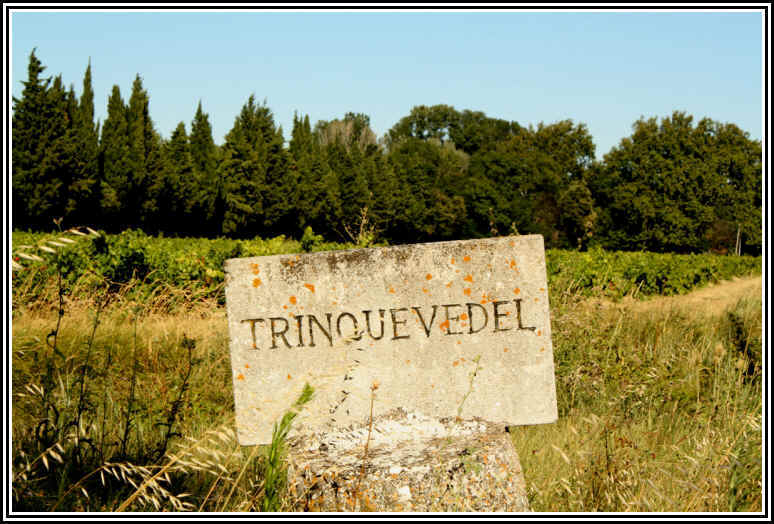
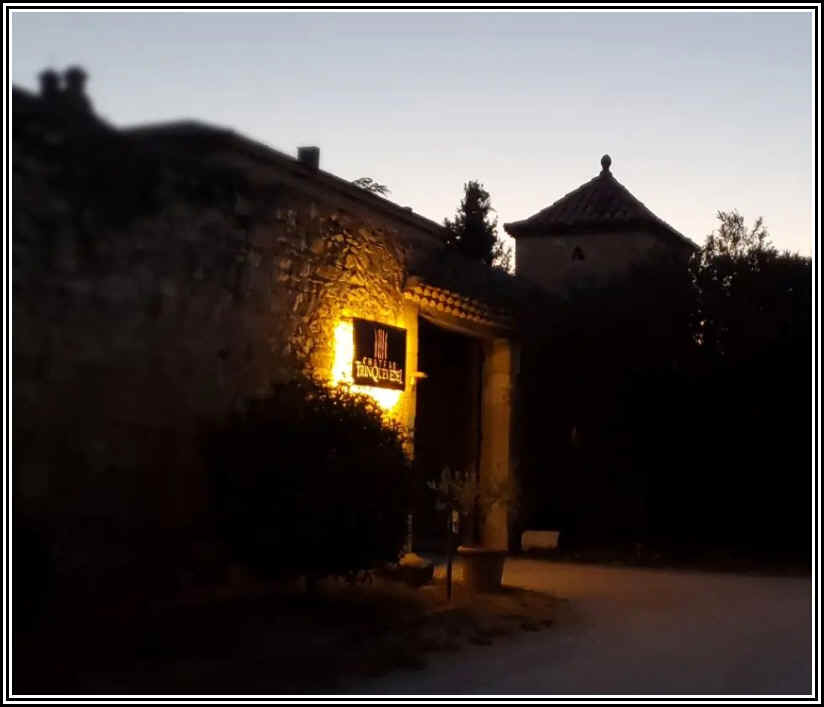
CHÂTEAU DE TRINQUEVEDEL
- Trinquevedel is a smallish estate in the Tavel appellation making a
really delicious dry Rosé.
In fact, in the Tavel appellation, only pink wine can be labeled as
Tavel. There is not a Tavel Blanc, nor a Tavel Rouge.
The Demoulin family has been at the helm of this magnificent estate for 4
generations, these days farming organically. They cultivate half a
dozen different varieties for their Tavel. It's typically half
Grenache with Cinsault, Clairette, Syrah, Mourvèdre and Bourboulenc.
We love the bright red berry-like fruit on the nose and
palate. The 2025 rolled in recently, just in time for warm
weather drinking!
-
Currently in stock: CHÂTEAU DE TRINQUEVEDEL 2025 TAVEL $19.99


-
UMATHUM 2022 "ROSA" $19.99
- One of
the top, elite winemakers of Austria is a guy named Josef Umathum. His
beautiful cellar is located in the Burgenland and you'll need an hour and a
half, typically to drive there from Vienna.
We were so delighted by his 2012 Rose, that I trekked to the cellar a few years to pay homage to this fellow and to taste his other wines!
If you would have told us that the 2012 Rose from an Austrian vintner would
be our best-selling pink wine over the years, I'd have suggested you have your
head examined.
Seriously? Are you nuts?
Or as young folks say today, "WTF?"
But, I kid you not...this wine was so well received, we were shocked.
People who had never bought Rose wines were returning to buy 6 or 12 bottles
of this!
It still is quite popular and customers can't easily remember the name
Umathum, but they do remember the distinctive bottle and the glass stopper.
The 2022 is now in stock It's a blend of
three varieties which are relatively unknown in these parts: Zweigelt,
Blaufränkisch and Saint Laurent. This has some nice red fruit notes to
it...raspberries...cherries...it's dry and even has a suggestion of tannin,
adding to its 'dry' character. The color is light red and
certainly youthful.
Umathum does not use a screw-cap for this wine, nor does he use a cork.
Instead, this comes in a special proprietary bottle and it's sealed with a glass
stopper. All you need is a thumb to open this and based upon consumer
reaction, this is worthy of a "thumbs up"!!!

Winemaker Josef "Pepi" Umathum in his new cellar...he makes a lot
of red wine, so there's an impressive room full of small oak barrels.
The Rosa wine is not aged in oak, however.

-
CHÂTEAU GASSIER
- This estate is located in France's Provence...Côtes de Provence
Sainte-Victoire to be specific.
The Gassier family owns the place but they recently partnered with another
winemaking family to additional expertise in viticulture and winemaking
They farm organically and have a modest-sized estate, routinely producing
good, aromatic Rosé wines/
The 2025 vintage comes in their new, hexagonal-shaped bottle and it's predominantly
Grenache with Syrah and Cinsault, though they blend ina bit of white wine,
too. Vermentino!
Lots of red berry fruit aromas and the wine is dry and crisp on the
palate.
-
-
Currently in stock: GASSIER 2025 CÔTES DE PROVENCE
ROSÉ $22.99
-
-


-


-
ANCIENT PEAKS "ONE STONE"
- Most people consider the region of San Luis Obispo to be a rather warm
site, producing wines of high octane and low acidity. But, in fact,
there are some microclimates which defy the prevailing
"wisdom" regarding this Central Coast area.
Ancient Peaks is located in Santa Margarita, California...some 14 miles
east of Morro Bay and 18 miles north of Pismo Beach. The
"recent" history of this property goes back to the 1990s when
the family of Napa Valley's Robert Mondavi winery invested in planting
vineyards on the diverse soils and various microclimates of this
relatively "virgin" vineyard land.
When the Robert Mondavi winery and its vineyards were sold to a big drinks
company, this property was put on the market as Constellation Brands had
little interest in yet one more brand of wine. Three San Luis
families partnered to buy the vineyards and launch the Ancient Peaks
winery.

- We tasted through a range of Ancient Peaks wines and the star of that
show is a wine bearing their "One Stone" label.

Their 2023 Rosé of Pinot Noir is a superb bottle of wine.
It reminds us more of European pink wines than typical Rosés from
California. The alcohol is below 14% for one thing.
For another, the aromatics are stunningly good...lots of red berry and cherry
notes.
It's dry and snappy on the palate, having crisp acidity.
We've suggested this to numerous customers and the fan club is growing.
I think this is our third vintage of suggesting this wine...still well-priced,
too.
One Stone is a totally refreshing wine...a perfect warm weather bottle!
By the way, the One Stone "project" helps fund a charity called
"Dream Big Darling" which helps mentor the next generation of women
working in the wine business.
DreamBigDarling.Org
Currently in stock: ONE STONE 2023
Central Coast ROSÉ of PINOT NOIR $15.99

AMEZTOI 2025 "RUBENTIS"
TXAKOLINA $26.99
- From Spain's Basque country comes this delicious and really crisp, tangy
pink wine. It's perhaps too dry for many people, but if you enjoy
wines with bracing acidity, then you should give this a try.
The center of production for the Basque wine called Txakoli or Txakolina
where they make a dry white wine from two unusual varieties:
Hondarribi Zuri, a white grape and it's blended with the red grape called
Hondarribi Beltza which is vinified as a white wine.
It's a wonderful wine for seafood and in the town of Getaria, the center of
Txakolina production, there's a fishing fleet that brings magnificent fish
to the town's dining hot spots where they do a simple preparation which
elevates the wine to dizzying heights.
Ameztoi is run by Ignacio Ameztoi, the seventh generation to grow grapes and
make wine.
The wine is low in alcohol, weighing in between 10.5% and 11%. And
they vinify it at low temperatures which allows the wine to retain a bit of
carbon dioxide. It's bottled in its youth to capture a tiny bit of the
effervescence. This actually reinforces the acidity, so if we want to
sell the wine, we'd describe it as "crisp." Marketing people
caution against using the term "tart" as many people will shy away
from that.
So we'll tell you this is crisp and leave it at that.
If you're having sushi, tempura, fried fish, fried chicken or some Jamón
Iberico, you might try a bottle of this. While it lasts. It's
well-regarded in the Bay Area market and you'll often see this on wine lists
which causes it to disappear.
Post-Script: We saw this on the wine list at NOPA in The City and
ordered a bottle to share with some Italian winemaker friends a couple of
years ago. They'd
never has Txakoli and were delighted by the wine (and the food at NOPA).

This was damned good as we brought a bottle to dinner at Dumpling
Time in San Francisco...
-
MATERRA
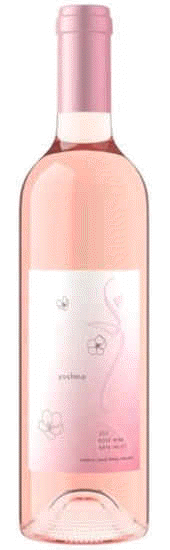
- From the Materra Cunat Family Vineyards were have a lovely Napa Valley
Rosé made of Malbec (74%) and Grenache (26%). Yoshino is the name
of a mountain in Southern Japan and you'll find that name on the label as
a great grandfather hailed from that region.
Cold fermentation in stainless steel tanks was followed by early bottling
to capture the berryish fruits of those two grapes.
It's dry and crisp being a lovely light-bodied pink wine. No
oak. Just good fruit.
Only a few hundred cases were made. Too bad. We enjoy drinking
this!
-
Currently in stock: YOSHINO 2024 Napa Valley "Yoshino
Rosé" $24.99



-
ARCA NOVA 2025 $10.99

-
- If
you've been looking for a dynamite example of Rosé made from the
Espadeiro grape, here you go!
But Touriga Nacional accounts for 65% of the wine these days, since it seems to be illegal to
make a Portuguese wine without that grape.
This is a gorgeous example of simple Vinho Verde and it even has a classic hint of
fizz to it.
The color this year has been a bit lighter than for some previous
vintages, but the fragrances and
flavors are quite similar to the berryish wine of last year...and we noticed
the wine seems to be acquiring more color as it's aging in the bottle.
It's quite crisp and nicely zesty and the wine seems to be quite dry.
This wine seems to cause those who have purchased it to be a bit perplexed.
We routinely see people returning to buy additional bottles after having
purchased a single bottle for "research" purposes.
They cannot believe the wine is "this good and it costs so
little."
Exactly.
Trust your taste.
You don't have to pay an arm and a leg to get a good bottle of Rosé.
But we understand that people feel a little bit guilty. They seem to
think they're stealing or getting away with murder.
Acra Nova was founded in 1985 and they're still family owned and
operated. António Esteves Monteiro started this enterprise. Today
they farm about 200 hectares of vineyards, claiming these are sustainably
farmed, some being biodynamically cultivated!

-
-

ESPRIT GASSIER "CÔTES DE
PROVENCE" ROSÉ Sold Out
The Gassier family has been in Provence for
centuries and in 1982 they purchased some 40 hectares of land in the environs of
Sainte-Victoire where they currently cultivate organically and make some good,
classic Provençal Rosé.

The 2022 Rosé is based on Grenache, as you
might expect. Add to the mix of this beautifully aromatic, dry pink wine
is Syrah, Cinsault, Cabernet Sauvignon and the white grape called Rolle.
Its youthfulness is on display, with red berry-like fruit and perhaps a note of
orange citrus.

Well worth a look!

-
MASSERIA LI VELI
- Italy's Puglia region has long been known for its wine
production.
For years it's supplied wineries in the north with dark-colored reds which
have been used to surreptitiously "fortify" lighter-colored
wines from the Veneto and Piemonte. We recall being told about a
winery making Amarone where the young winemaker added some Puglian red
and, not knowing his son already fortified the tank, added some more
Puglian red. The unsuspecting visiting wine writers that day did not
suspect any shenanigans, but the father and son were both surprised when
they tasted the tank sample being shown...
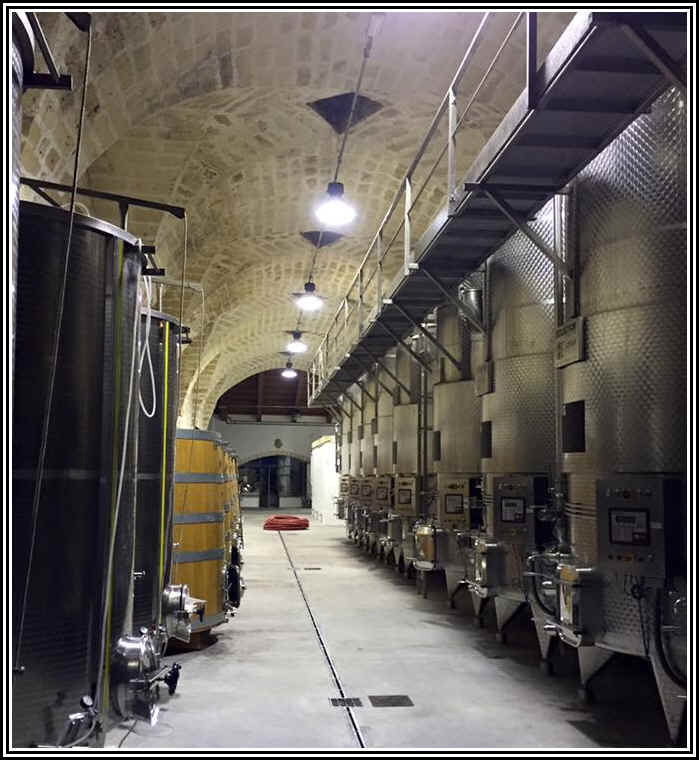
Masseria Li Veli has been around for ages, but its current chapter is
rather recent.
The property was purchased in 1999 when the Falvo family sold their
highly-esteemed winery in Tuscany, the famous Avignonesi property.
They had been making a hugely famous Vino Nobile as well as a benchmark
Vin Santo.
Now they've traded Sangiovese and Trebbiano for other grapes.
The Susumaniello variety is one which was nearly extinct. There was
an obscure, old vineyard planted, it's thought, just after World War
II. It was a mixed vineyard with one patch for Negro Amaro, a major
red grape from Puglia, one patch of Malvasia Nera and one parcel with
Susumaniello to add color to the others.
We understand that as of 2010 there were but 20 hectares of
Susumaniello. We understand there are but 50 hectares today.
But these days there's greater interest in the grape
and we've been delighted with Li Veli's red version.
The 2025 Rosato is a recent arrival and its production is rather limited.

It's beautifully fresh and aromatic, with aromas of
passion-fruit and what we interpret as "green," herbal notes.
It's dry and fruity.
Currently in stock: 2025 MASSERIA LI VELI
SUSUMANIELLO ROSATO $32.99

.


CHÂTEAU FONTARÈCHE 2025
CORBIÈRES ROSÉ Sold Out Presently
The vast south of France can be a good source of
well-priced wines of all colors.
The Fontarèche winery has been on our radar for a while now, and we find they
routinely make wines of interest.
They've got a knack for producing wines which taste more expensive than they
cost and this Corbières Rosé is a good example.
Ever heard of the Picpoul Noir grape? This vintage is 50% Picpoul Noir
with 25% each of Grenache and Syrah.
Lots of fresh, bright red berry fruit on the nose and palate. It's dry and
light, but full-flavored.
And it tastes more expensive than it costs!!
-
POJER e SANDRI "VIN DEI
MOLINI" 2021 "ROSATO" Sold Out
- Ever heard of a grape called Rotberger?
You're not alone if you said "no."
It's a variety that the University at Geisenheim in Germany's Rheingau
came up with in 1939. The crossing is Riesling with Schiava.
In the Sudtirol Schiava goes by its German name, Vernatsch.
The red grape Schiava is a bit weak in color, so making it into a pink
wine is sheer genius. But making it into a really aromatic and
delicious rosato takes some skill and attention to detail.
We suspect this will be the best Rotberger Rosé you've ever
tasted.
It has a faintly herbal note along the lines of some Sauvignon Blanc
wines. Maybe a touch of cassis, too.
Dry and light, yet with plenty of flavor, we enjoyed this recently with
Dim Sum...
-

- Damned good.
The new importer for Pojer e Sandri was uncertain about his
customers being interested in such an esoteric wine but has since found there is
interest in this lovely dry pink wine!
No wonder!

-
WHISPERING
ANGEL 2024 CÔTES de PROVENCE ROSÉ Sale $24.99
- This wine company makes a number of Rosé wines and has its home-base in
La Motte, about 45 minutes west of Cannes and an hour and twenty minutes
east of Aix-en-Provence. It's the brainchild of Sacha Lichine whose
father Alexis was a major mover-and-shaker in the wine world who worked in
nearly every phase of the wine industry.
Lichine (Alexis) had purchased a winery in Bordeaux called Château Le Prieuré
which he was able to rename as Château Prieuré-Lichine. This
was a property in the Margaux appellation which was very popular in the
1970s and 1980s, as Lichine offered a good wine at a favorable
price. He died in 1989 and his son Sacha sold the winery and pursued
other interests.
In 2006 Lichine bought the Château d'Esclans property in Provence and
he's built the business in a most efficient manner. But keep in mind
Château d'Esclans is a wine estate with vineyards while the Whispering
Angel wine comes from the "Caves d'Esclans" which is a negociant
business. They may make some wine and augment the production with
tanks purchased on the bulk market.
They make a few different bottlings, but the one called Whispering Angel
has gained some traction in the market and we get requests for it. I
suspect part of their success is due to having a perfectly satisfactory
wine in a bottle with a brand name that Americans can easily pronounce.
We suspect they've gained a bit of a market thanks to the split up or
divorce of Angelina Jolie and Brad Pitt who were behind the wine called Château
Miraval. As some consumers are no longer drinking the Rosé of the
Hollywood stars, they've found the "next hot wine" in Whispering
Angel.
Brad Pitt and winemaker Marc Perrin are continuing to produce Miraval Rosé,
though.
Their 2021 is better than they've had, so that's good news.
So d'Esclans' Whispering Angel is primarily Grenache with a bit of Cinsault
and the white grape called Rolle.
They say the grapes are picked from sunrise to noon so as to not bring the
fruit in at an elevated temperature. The grapes pass through an
optical sorting machine to kick out anything that's not quite right.
It's fermented in stainless steel tanks and they stir the lees
periodically. Bottled young and fresh, of course.
We've tasted the entire portfolio...perfectly good wines. They make
one called Garrus from seriously old Grenache and Rolle which is fermented
in oak. It retails for about $100 and gives one a different
perspective on Rosé.
But you can buy half a case of more cheerful pink wines for the price of
one bottle of Garrus.
We liked the wine, though but most customers looking for Rosé want
something south of $25 a bottle.

-

-

CHATEAU DE CAMPUGET 2024 COSTIERES DE NÎMES
SALE $10.99
This 160 hectare estate is situated between
Arles and the town of Nimes and it's owned by the Dalle family. Jean-Lin
Dalle is assisted by his son, Franck-Lin (Jean-Lin's a history buff and has an
appreciation for American founding father Benjamin Franklin). We don't
know if they follow NBA basketball and are fans of sharp-shooter (and former
Golden State Warrior player) Jeremy Lin.

We've found their recipe for Rose to be rather good and the wine arrived at an
attractive price, too.
(We noticed a wine merchant not far from our shop is offering this at a 20%
discount. This sounds mighty attractive until you see the price is $35.)
The 2024 is 60% Syrah and 40% Grenache Noir. Lots of berryish fruit and
the wine is nice and dry.

Tasting at Campuget...

The vineyards...as you can see, they do not employ chemical weed-killer to
the vines.


LOPEZ HEREDIA
We periodically are allocated a few bottles of
the Viña Tondonia Rosado...a few bottles of the 2012 arrived in the early
summer of 2022...yes! Ten years old and it's their "freshest"
"pink" wine.
They tell us it's predominantly Garnacho (as they call it) with 30% Tempranillo
and about 10% of the white grape, Viura.
This is a world apart from the typical, fresh, youthful, aromatically fruity
pink wines in the shop.
Currently in stock: LOPEZ HEREDIA 2012 VIÑA TONDONIA Sold Out

CASAL GARCIA VINHO VERDE ROSE $8.99
This
is a remarkably good, dryish pink wine from Portugal...it's from a winery a few
miles outside of Oporto and they're famous for their Vinho Verde.
If you've been searching for a rose made from 30%
Vinhao, 35% Azal Tinto, and 35% Borracal, here's your wine.
It's fresh, strawberryish and slightly sweet, with a faint spritz to it.
Between the fresh and fruity notes and the low price, it's routinely been a
popular wine.
This is a delightful wine, flavorful and low in alcohol.


Domaines Ott Rosé 2023 "Clos des Mireille"
(List $65) SALE $59.99
The
fancy bottle was designed in the 1930s and the Ott family makes one of France's most
esteemed rosé wines in Provence.
The family owns three estates:
Clos Mireille, producing Côtes de Provence white wine and a rosé.
Château Romassan, a Bandol property where they make red, white and rosé.
Château de Selle, their original and oldest holding in the Côtes de Provence where they
make rosé and red wine.
The 2023 from Clos des Mireille is 80% Grenache with 15% Cinsault and 5%
Rolle. No Syrah this vintage.
I think this wine is
best served with Provençal-styled cuisine. Bouillabaisse wouldn't be a bad idea.
Nor would something incorporating saffron.
Olives...Pesto...Mediterranean fare.


- CLOS CIBONNE
- This little property is located about an hours' drive east of Marseille
and about an hour and a half west of Nice. You'd need about half an
hour, driving east, from Bandol. And like Bandol, it's within view of
the little harbor of Toulon, where you'd catch a boat to Corsica.

- The domaine takes its name from a sailor who was a captain in Louis The
16th's navy who owned the place in the late 1700s. Captain Jean-Baptiste
de Cibon died in 1797 and the estate was sold to the Roux
family.
Andre Roux, who passed away in 1989, had planted a lot of the Tibouren grape
on the property before World War II.
This variety is rather obscure, but if you drive a couple of hours into
Italy, you may find the same grape which is called Rossese di Dolceacqua.
Some theories postulate this grape originated in the Middle East or
Greece.
The Roux family still cultivates Tibouren and it's a specialty of this
domaine.
But this is not a fruity, care-free little wine that's bottled a few months
after the harvest...instead they ferment it in stainless steel, temperature
controlled tanks for about ten days and then it's racked in ancient
cooperage, foudres which are a century old. They typically blend a
small amount of Grenache into the final cuvee. The wine then remains in
those old wooden vats for about a year before it's bottled.
It's a mildly minerally Rose, with an orange-hue to its coloring. The
wine pairs nicely with a classic seafood stew, though the winery web site
claims it's ideal paired with red mullet or a lamb curry.
Currently in stock: 2024 CLOS CIBONNE Tibouren Rosé $45.99

Olivier and Claude Deforge
-

DOMAINE De L'HORTUS 2021 Sold Out Presently

The
Orliac family owns this modest domaine, one of the quality leaders in the
Pic St. Loup appellation in the Languedoc.
The photo on the right
shows young François Orliac in their rocky vineyards.
This is the eighth or ninth vintage of their Rosé that we've had in the
shop. It used to be made of juice bled off their red wine production,
starting with the 2015, they've done a direct pressing of the grapes.
It used to be a blend of Syrah, Mourvèdre and Grenache. This vintage is
is just the Grenache and Syrah. You'll find a lot of raspberryish notes in this wine and it's perfect for
taming spicy foods. It's a great picnic wine, too.
-
-
-

-
-
HEITZ 2018 Napa Valley GRIGNOLINO ROSÉ
 A
sure sign of Summer was the arrival of Heitz old-fashioned, dry, Napa Valley rosé
made of the Italian Grignolino variety. A
sure sign of Summer was the arrival of Heitz old-fashioned, dry, Napa Valley rosé
made of the Italian Grignolino variety.
The Heitz family sold its name and winery to another family from the
southeast. Gaylon Lawrence Jr. has acres and acres of citrus groves
along with other investments (such as a bank and a heating & air
conditioning company).
The late Joe Heitz made a traditionally-styled Rosé, with skin contact to
provide color, aromas and flavor.
The new winemaker, a young gal named Brittany Sherwood, was trained by David
Heitz and she's been with the winery since 2013, or so.
Curiously, though, she's changed the vinification for the Rosé, minimizing
the skin contact. She says this produces a wine with "fresher,
delicate textures" as a result.
We were skeptical, but bought a bottle for a dinner and, happily, the wine
is still quite good. All things being equal, we'd suggest going back
to the historical vinification of this wine.
But the 2018 displayed mild fruit aromas with notes suggesting peach and
melon.
It's dry and reasonably crisp on the palate. Now sold out and it's
unclear if they will make more.
UPDATE: We tasted their new label of BRENDEL Rose...bought a bottle of
the 2019 vintage.
it's a sparkling pink wine that's quite dry and perfectly pleasant. We
did not find the aromas of sweet fruits and flowers which has typified Heitz
Rose over the past 20 or 30 years. If they want to make bubbly out of
that fruit, they should consider capturing the fruity notes for which the
wine was justly famous. Otherwise it's just fizz.
Currently in stock: 2018 HEITZ CELLAR GRIGNOLINO ROSÉ Sold Out...

Elisa Scavino of the Paolo Scavino winery in Castiglione Falletto.

Izzy Oddero of the Oddero winery in La Morra.

-
DOMAINE TEMPIER
 The
Tempier estate in the Provençal region of Bandol has become an iconic
label over the past decade, or two. The
Tempier estate in the Provençal region of Bandol has become an iconic
label over the past decade, or two.
The quality of the wines has improved and the wines are reliably
good.
Tempier is owned by the Peyraud family and Lucien Peyraud had been
instrumental with promoting Bandol as a grand vin on par with
famous Bordeaux and Burgundy wines. His sons took over the
estate in the 1970s, but these days the operations are overseen by
Daniel Ravier.
They have had about 40 hectares of vineyards, but over the past few
years they've increased their holdings, not wanting to buy
grapes. They prefer to manage the vineyards themselves. And they
farm organically and biodynamically.
Their Rosé has become hugely popular and the importer actually
allocates a box or two to their numerous accounts.
The wine is based, of course, on Mourvèdre (55% is the normal
percentage) with the balance being Grenache and Cinsault. No
Syrah or Carignane.
You might notice many Rosés from Provence are very pale in color,
Tempier's has a fairly healthy pink tone. Ravier
feels many of the really pale-colored Rosés lack character and
consistency.
The price of the 2018 vintage jumped about 15% from
that of the 2017. And yet the wine remained in great
demand.
Is it superior to other Bandol Rosés?
We can say it's a very good rendition and given the marketing work of
the local importer, it's got great brand recognition.
-
Currently in stock: 2024 DOMAINE TEMPIER BANDOL
ROSÉ Sold Out
-
CHATEAU LA CANORGUE
From
the Cotes du Luberon we have this splendid dry Rosé from Jean-Pierre
Margan's Chateau La Canorgue.
This beautiful property was the filming location for the Russell Crowe
movie, A Good Year. The property is so nice, we understand someone
from the Rockefeller family presented Jean-Pierre with a blank check,
saying "fill in the amount and leave." He told them
"merci, but non merci!"
Jean-Pierre has long been farming with an eye towards organic
viticulture. In fact, he's farming biodynamically.
The 2017 Rosé is a delight...a shade more color than last year's.
You might say it bridges the gap between typical Rosé from Provence and
the Rhône. The wine is a blend of Grenache, Syrah and Mourvedre...dry and
fresh, with some berry and spice notes.

Currently in stock: 2017 CHATEAU LA CANORGUE
LUBERON ROSÉ Sold Out
LE ROC ROSÉ 2017 (FRONTON) SOLD OUT
Château Le Roc is the leading estate in the Fronton region near Toulouse.
The Ribes brothers make some terrific wines, using the Negrette grape (we
call it Pinot Saint George here in California). In addition to the
Negrette, there's 35% Syrah and 5% Cabernet.
Their 2017 Rosé is berryish and dry with a touch of spice. Good value.
Remarkably balanced, too...


-
STOLPMAN VINEYARDS & WINERY
- The Stolpman story has its origins in the Napa Valley
when newlyweds Tom and Marilyn Stolpman were on their honeymoon.
They fancied the idea of a vineyard and maybe a winery while on that
little retreat from reality.
Then in 1988 he found a site in Santa Barbara which had a lot of limestone
and so he purchased a 220 acre property in Ballard Canyon on which he
envision growing a few grapevines to make wines along the likes of the one
they enjoyed from Europe.
The winery was founded in 1990 and today the family cultivates more than
150 acres of vines!
We tasted a number of wines with seemingly hand-written labels such as
that bottle depicted above. It's from a series of wines they called
"So Fresh," as the wines are vinified from un-crushed grapes
which are harvested at modest sugar levels to retain higher acidity.
These, we're told, are wines which are bottled young and with minimal
sulfites.
The 2021 "Love You Bunches" Rosé is made of fruit from Santa
Barbara vineyards and some in southern San Luis Obispo County. It's
80% Grenache and the balance evenly split between Mourvèdre and Syrah.
We like the European styling here: Lower-than-Normal alcohol for a
California wine and it's nicely crisp and tangy. We find hint of
peach, melon and maybe a raspberry, or two on the nose and
palate.
-
-
Currently in stock: 2021 STOLPMAN
"LOVE YOU BUNCHES" ROSÉ Sold Out
-

BUBBLY ROSE WINES
And of course we have a
number of top Brut Rose wines in the shop...
Billecart-Salmon, Schramsberg, Laurent Perrier, Rene Geoffroy, Bollinger and
Allimant Laugner's Cremant d'Alsace Brut Rose.

The Allimant Laugner is presently $22.99 with case discounts.
It's a great buy in bottle-fermented bubbly.
A new addition is Vitteaut Alberti's Brut Rose ($19.99!), a Cremant from
Burgundy. It's made entirely of Pinot Noir and is nicely dry and yet
retaining a touch of fruit.

LANCER'S
 We
get numerous requests for Lancer's Rosé and are happy to special order it for
our customers.
It currently goes for $6.99 before the 12 bottle case discount.
If you're interested in a case, please call us to place your order.
This is what it used to look like:
 This
is how it looks these days: 
MATEUS

This goes for $7.99 a
bottle. I bought one to taste it just to check it out.
It's pale pink, sort of onion skin color. Sweet...not much fruit on
the nose...
And it still comes in its flagon-shaped bottle. We actually have a few
bottles in stock...
BLUE NUN
 Back in
the early 1970s, Blue Nun was "the" German wine. It took the
mystery out of buying a bottle of Riesling...you did not have to know
hard-to-pronounce names such as "Weingut Reichsrat Von Buhl Forster
Kirchenstuck
Riesling Spätlese trocken Grosses Gewächs." Back in
the early 1970s, Blue Nun was "the" German wine. It took the
mystery out of buying a bottle of Riesling...you did not have to know
hard-to-pronounce names such as "Weingut Reichsrat Von Buhl Forster
Kirchenstuck
Riesling Spätlese trocken Grosses Gewächs."
Blue Nun won't be winning any blind-tastings of German wine, but it is still
available for those customers who have a case of nostalgia and want a case of
Blue Nun.
MOUTON CADET
 This
wine is purportedly from Bordeaux. This
wine is purportedly from Bordeaux.
It sort of tastes like a Bordeaux, but we wouldn't be surprised if other wines
were blended with Bordeaux to create Mouton Cadet.
In the late 1960s and early 1970s, chic wine drinkers knew this brand as being a
symbol of good taste and sophistication. I think today the same people (or
their offspring) buy wines such as California's Far Niente or Cakebread to
demonstrate their status as bon vivants.
The white wine equivalent of Mouton Cadet came from the Burgundy firm of Louis
Jadot. (See below...)
LOUIS JADOT
 You
have to give the people credit who would come into a shop or restaurant and try
to pronounce the name of this wine.
"Do you have any Lou-ee Jar-dott Polly-Foos?"
"Where's the Louis Jadot Pussy Fussee?"
It was a sign of sophistication, to be sure, to be able to order a bottle of
this wine in a restaurant. Your guests knew you were a sharp, well-heeled
individual. The waiter knew and so did the bus boy.
I think yesterday's Pouilly-Fuissé drinker is today's buyer of Far Niente or
Cakebread Chardonnay.
If you want some bottles of Jadot Pouilly-Fuissé or their perfectly
ordinary Macon Villages, let me know and we'll special order these for
you.


BACK TO OUR HOME PAGE
|


